Why We Don’t Feed Wildlife
We hear it all the time… “sorry I didn’t know I couldn’t feed the squirrel”…
After all, tossing a few crackers to fish or sharing a snack with a squirrel seems harmless, fun even. Many people do it because they enjoy interacting with animals and want to help them, as well as connect to them. Unfortunately, feeding wildlife can create serious problems for both animals and people.
Wild animals are incredibly good at finding food on their own. When visitors regularly provide food, animals begin to associate people with an easy meal.
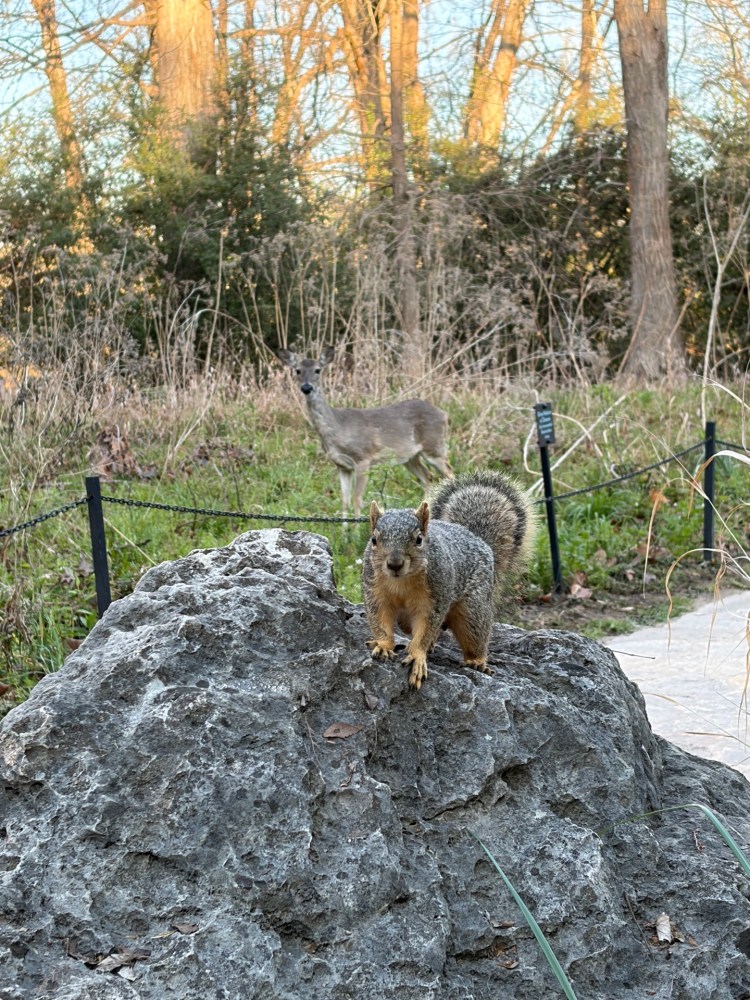
At Blue Hole Regional Park, fish often gather around swimmers and visitors because they have learned that people sometimes bring food. While this may seem entertaining, it is not natural behavior and can alter how wildlife interacts with its environment. Squirrels provide another example at Blue Hole. Animals that are regularly fed by humans become bolder over time. Instead of avoiding people, they begin approaching visitors, picnic areas, coolers, and backpacks in search of food. What starts as a fun cute squirrel encounter can eventually become a safety concern when animals become aggressive or persistent.
Human Food Isn’t Healthy for Wildlife
Wildlife has evolved to eat foods found in nature. Chips, crackers, bread, and other snacks commonly offered by visitors do not provide the nutrition animals need and can contribute to health problems.
Parks are complex ecosystems where plants, animals, insects, water, and soil all work together. When wildlife behavior changes because of human feeding, it can affect other species and disrupt the natural balance of the environment.
The best thing visitors can do for wildlife is simple: enjoy animals from a distance and allow them to remain wild. Take photos, observe their behavior, and appreciate the opportunity to share space with them, but leave the feeding to nature. By not feeding wildlife, you’re helping ensure that the animals at Blue Hole remain healthy, safe, and truly wild for generations to come.