
The Hidden World of Fungi
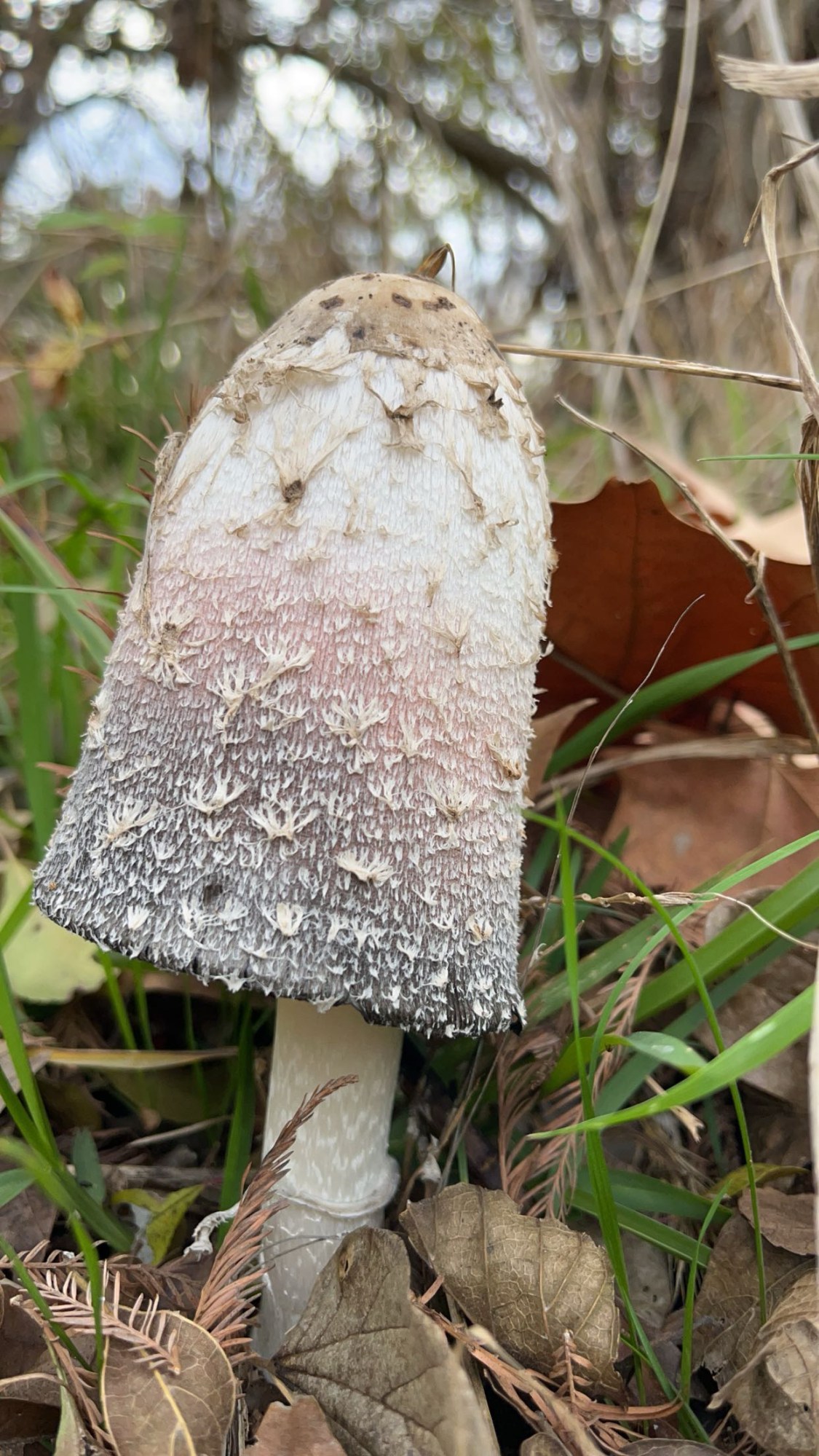
Preface: Each summer, our seasonal Park Operations staff are encouraged to take on a passion project of their choosing. These projects can take many forms, from park improvements and interpretive materials to program development, research, or other projects that allow staff to explore an area of interest and gain professional development while contributing to our parks and community.
The following blog post is one of this year’s projects. We’re excited to share the work and perspective of one of our staff members and hope you enjoy learning about mushrooms!
–
When you think of the hill country you might think about our crystal-clear water, towering cypress, colorful wildflowers, and scenic views. Many miss the hidden world that can be found throughout the woods here. There is a hidden underground world in the hill country most people don’t notice. Out of sight, just below your feet there is a network of mycelium that has spread through the ground working to connect the environment together, spreading nutrients, supporting plant life, and helping connect the entire ecosystem.
The Mushroom
Most of a mushroom’s life is spent underground or inside dead trees as a tiny thread-like structure called mycelium. This underground network spreads through its environment, collecting water and nutrients. When conditions are right, usually after periods of moisture and rain the fungus will fruit. A common misconception is that mushrooms like to grow in dark wet spaces while they like their moisture they rely on light to determine which direction to grow.
The mycelial network underground is the main organism that is spreading and collecting nutrients in its surrounding ecosystem. This network can vary in size and species; for example the Turkey-tail mushroom likes to inhabit dead deciduous trees, while others can take up huge areas the world’s largest known mycelial network belongs to the Honey Fungus in Malheur National Forest this fungus has taken up 2,385 acres of land making it the largest living organism it has been estimated to be around 2,400 and 8,650 years old.
Folklore And Science
Ancient Greek folklore states that zeus threw mushrooms to the ground with a bolt of lightning; and it actually turns out they weren’t far off. Research from the Iwate University in Japan suggests that lightning does play a role in mushroom growth. When they shocked shiitake and Nameko with artificial lightning, that electrical surge increased yield by as much as 200%.
From the British Isles we hear of stories where elves or fairies would come out at night and dance around the forest and wherever they danced a ring of mushrooms would appear in the morning. In Germany, and France there are stories of witches scorching the ground and mushrooms growing in a circle around it. Today we know the true cause of this phenomena what people saw were these rings of mushrooms where grass had died on the inside of the ring leading them to think of supernatural answers but in reality it was mycelium under the ground growing in a circular pattern this lead to the grass being choked out in the center causing it to die.
Nature’s Recycling System
Fungus is an essential decomposer acting as nature’s primary recycler responsible for breaking down tough plant matter, rock, and dead animals. Fungus returns vital nutrients to the soil and drives the global carbon cycle.
Did you know 359 to 299 million years ago during the carboniferous period trees evolved a new tough material called lignin. It was great for the tree’s survival but it was a bit too good. At the time insects, bacteria, and fungi hadn’t developed the chemical tools to digest it. This caused carbon to be stored inside the trees and prevented it from being released back into the environment. This was one factory that led to the ice age. Thanks to our fungi friends a white-rot fungus evolved able to break down lignin and save the world.
Remember
The next time you visit after a good rain, slow down and look carefully along the trail. Check the bases of old oak trees, fallen logs, and patches of damp leaf litter.
If you visit Blue Hole Regional Park when it’s wet out, take a walk along our “red” trail. My favorite mushroom to find along the way is the Jack O’Lantern Mushroom which is an orange mushroom that grows in groups. Also, along our “yellow” trail, you’ll find a fallen tree which will consistently grow a white mushroom the covers it called the Favolus Brasiliensis. Picture of both below.
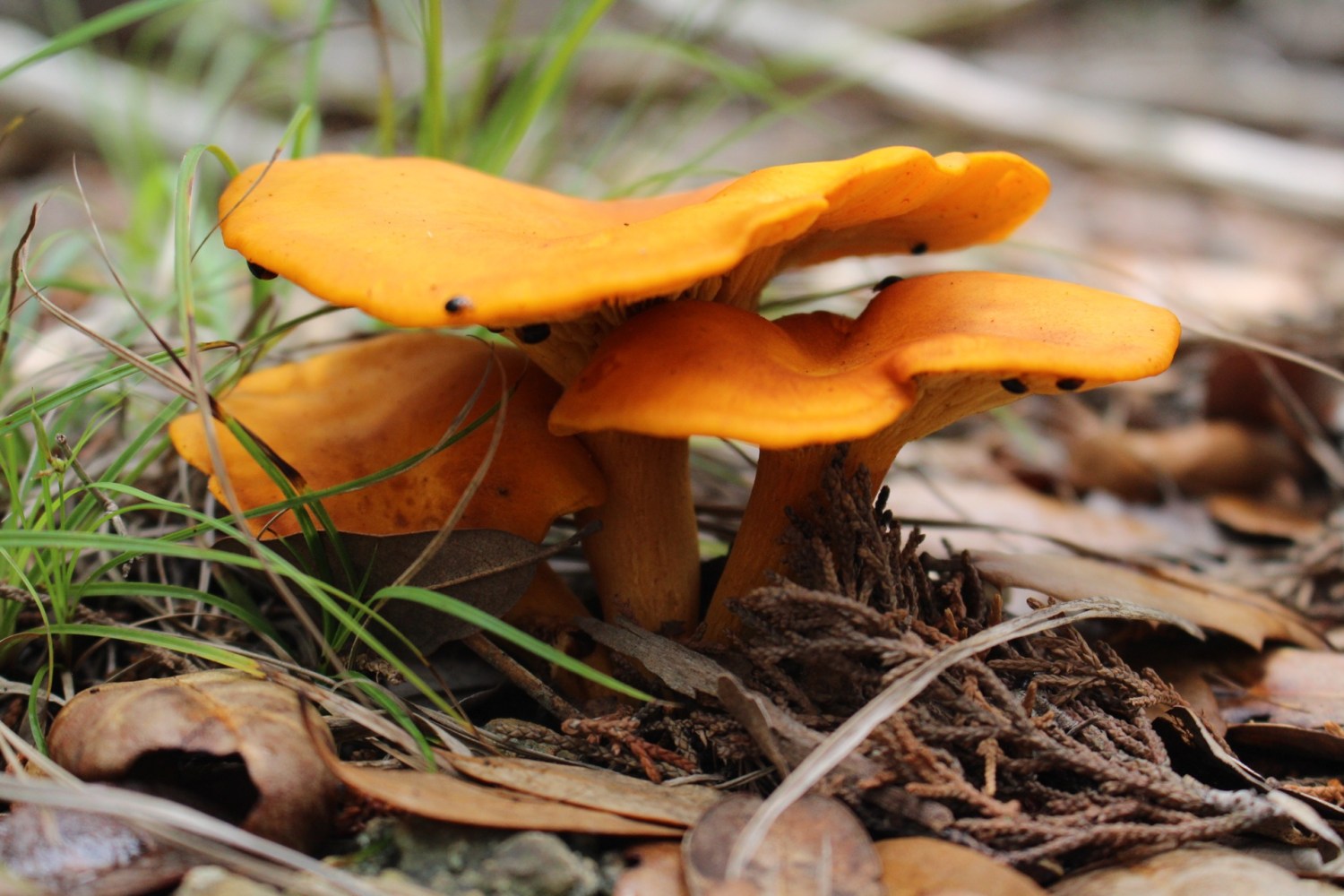
Photo by Sebastian Cecchini
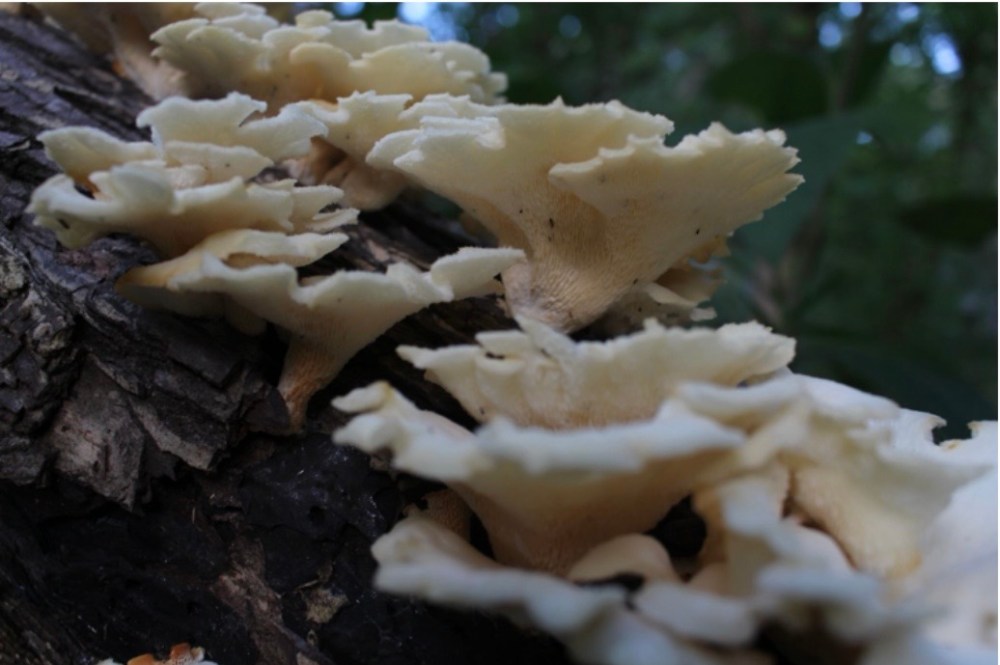
Photo by Sebastian Cecchini
Written by Sebastian Cecchini – Park Supervisor