Wimberley Parks Awarded Bring Back the Monarchs to Texas Grant
Did you see the Monarchs migrating north in the spring? Or maybe you saw the Monarchs flying south through Texas to return to Mexico in the fall. If so, you might have noticed that there were fewer than there used to be. The Native Plant Society of Texas is doing its part to reverse this population decline.
Texas provides critical habitat on the main migration pathway to and from the Monarchs’ winter home in Mexico. The availability of milkweed and nectar plants has dropped sharply in Texas. Milkweeds act as host plants for Monarch caterpillars to eat and are essential to the Monarchs’ breeding success. Nectar plants are needed by adult butterflies to supply the energy to fly and lay eggs. Both are required for Monarchs to reproduce and migrate successfully.
Modern farming practices, pesticides, drought patterns, and the mowing and manicuring of roadsides, parks and open areas have all had a negative impact on the native plants Monarchs use and on the number of Monarchs surviving for the southbound journey to Mexico.
The Native Plant Society of Texas and Monarch Watch created the “Bring Back the Monarchs to Texas” (BBMT) program in a joint effort to educate members and the public about Monarch biology and conservation, to encourage propagation and distribution of native milkweeds that support Monarch reproduction, and to restore Monarch habitats throughout Texas.
Their annual BBMT grant program makes grants available to schools, nature centers and other organizations, to create additional Monarch habitat using native Texas plants. Their BBMT committee also helps arrange in-person and remote education opportunities for all Texans on all aspects of Monarch biology and conservation, Monarch habitats, and gardening for Monarchs. To date, hundreds of Monarch garden habitats have been installed, and tens of thousands of people have attended their educational programs.
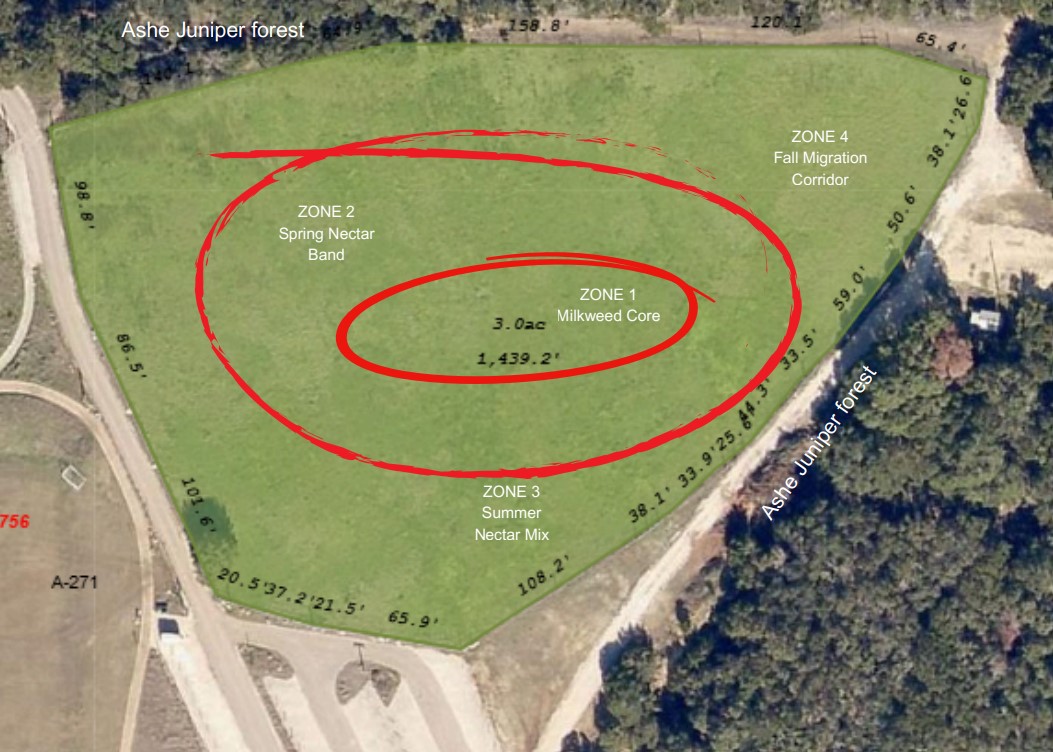
Wimberley Parks and Recreation is always looking for new opportunities and projects to diversify plant life at our parks, as well as do everything we can to benefit our pollinators, with Monarch butterflies at top of mind. Our team already has an ongoing project at Blue Hole to restore the old spray field in to a native prairie and we were seeking every opportunity to help with this project. A number of different seeding and planting days have already been done in this area, but with our budget being tight, this grant would allow us to do even more! So, this year we submitted an application to receive funding from the BBMT grant to purchase and plant seed and native plants as part of our prairie restoration project. We were so excited and thankful when we recently learned that our application had been approved, and we would be one of this year’s recipients of funding! Some of the planting has already begun, and we are currently working on procuring the rest of the plants and seed in our plan to be planted later this year. We want to give a huge shout out to The Native Plant Society of Texas and Monarch Watch for the amazing work they do. Wimberley Parks and the Monarchs thank you!
A Bring Back the Monarchs to Texas fund has been established to collect donations that fund the BBMT grant program and make other education and conservation efforts of the Bring Back the Monarchs to Texas committee possible. Help them out and donate now as an individual, company, or chapter by clicking the links.
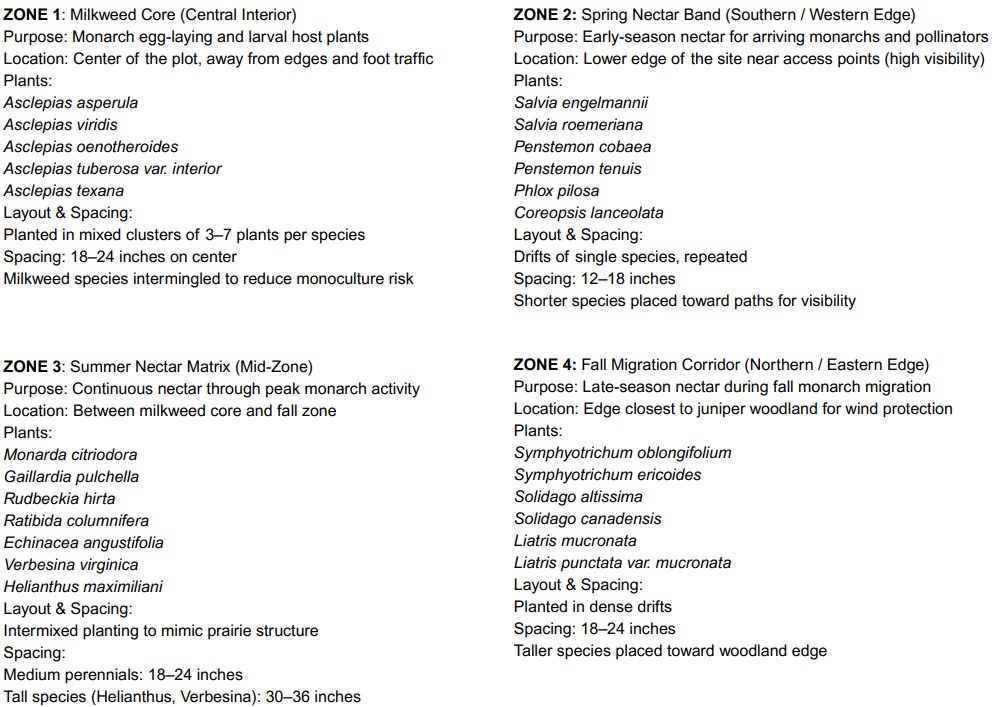
Below is our plant list for those interested: