A Community Pool for Wimberley: Is It Feasible?
Could Wimberley one day have a public swimming pool? The City recently received the final aquatics feasibility study from consultants from Kimley-Horn, who evaluated community needs, local demographics, existing swimming facilities, potential pool designs and locations, construction and operating costs, and possible funding strategies.
Community feedback was an important part of the process. The online survey received nearly 400 responses, and a community meeting produced similar feedback. The survey showed majority support for a public pool. Respondents expressed interest in swimming lessons, youth and high school swim teams, fitness and lap swimming, and recreational swimming. Affordability, construction costs, ongoing operating expenses and water use were among the biggest concerns.
The consultants recommended looking at a service area within a 20-minute drive of Wimberley, representing approximately 30,000 people. The study also looked at existing swimming options in the region. The Dripping Springs YMCA reported about 400 members from Wimberley, and mobile data showed significant visitation to its pool from the Wimberley area.
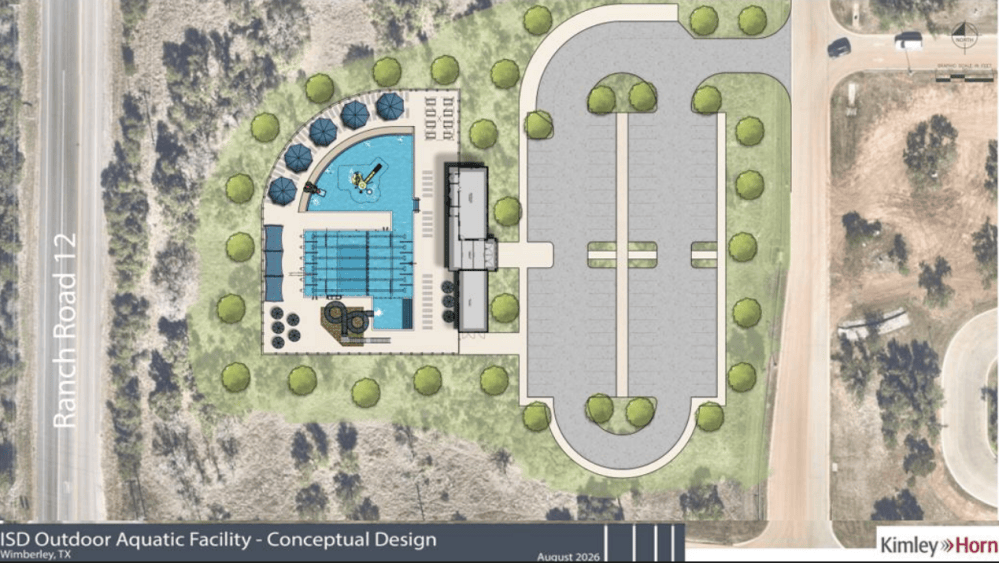
The study evaluated two main concepts at two potential locations: Blue Hole Regional Park and Wimberley ISD property near Winters Mill and RR 12. The outdoor recreational pool would include six lap lanes, a zero-entry play area and a body slide, with construction estimated at about $10 million. A basic outdoor six-lane pool would cost approximately $8.5 million. An indoor, six-lane, 25-yard pool was estimated at about $16 million.
Construction is only part of the cost. The outdoor recreational pool could cost around $300,000 annually to operate, with revenue of up to approximately $160,000. The indoor pool could cost around $700,000 annually to operate, with revenue of up to approximately $250,000. That means the City could need to subsidize operations by roughly $150,000 per year for the outdoor option or $450,000 to $500,000 for the indoor option. The consultants also noted that construction costs have roughly doubled since 2015.
Water availability is another major consideration. The study estimated annual water use of approximately 1.5 to 2 million gallons. Rainwater harvesting was not considered a feasible primary water source under the requirements evaluated, and regenerative media filtration was identified as a possible way to reduce water lost during backwashing.
The consultants also discussed potential partnerships. Wimberley ISD was open to contributing land but had not committed to funding construction or operations. The YMCA appeared interested in potentially partnering on operations. The City of Woodcreek had offered land, although the sites considered there were not well suited for the project. Board members also discussed grants, bonds and other funding options, including whether a pool could be considered as a separate item in a future school district bond package. A project of this scale would likely require support from across the wider Wimberley Valley.
The potential location at Blue Hole Regional Park also prompted discussion because a pool could conflict with the park’s master plan. The consultants acknowledged that concern and explained that Blue Hole was considered largely because it is the City’s only available property that would fit a pool. No final location has been selected, and no funding plan or construction timeline has been established.
Ultimately, the study provides a clearer picture of what a public pool could offer Wimberley, along with the financial and practical challenges involved. A pool could expand opportunities for swimming lessons, water safety, fitness and recreation, but it would also require a significant upfront investment and ongoing financial support. The study is an important step in evaluating those possibilities, and any future decisions will need to weigh community interest against the long-term costs, water needs and responsibilities of operating a public swimming facility.
Click here to view the study