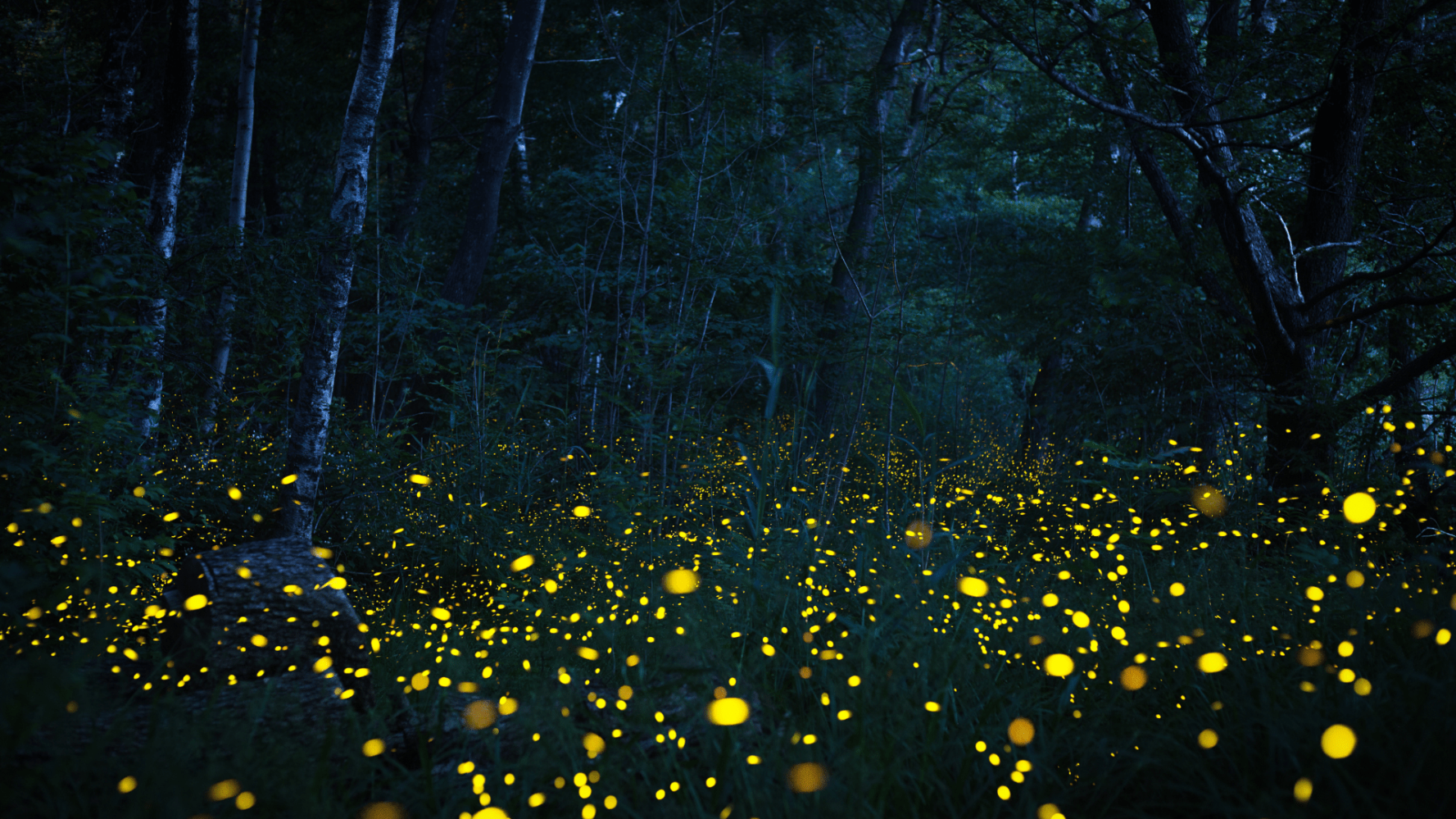
All About Fireflies!
While we are so thrilled that our Firefly Watch programs at Blue Hole Regional Park are sold out, we want to make sure those who were unable to attend can still enjoy some of the fascinating information shared during the program.
Few summer sights are as magical as watching fireflies blink across the night sky. These fascinating insects spend most of their lives hidden from us underground before emerging for a short adult season filled with flashing, flying, and finding mates. These electric friends go through four life stages: egg, larva, pupa, and adult. After hatching, the larvae, often called “glowworms,” live in soil and leaf litter for up to two years, feeding on worms, snails, and other small insects before transforming into adults in late spring and summer. In Texas, fireflies are most active from May through July just after dusk.
Like all insects, fireflies have three main body parts: the head, thorax, and abdomen. Their antennae help them smell and sense the world around them, while large compound eyes allow them to detect movement and light in many directions at once. Fireflies are actually beetles, with hard outer wings called elytra that protect their softer flight wings underneath. Their most famous feature is the lantern on their abdomen, which produces light through a process called bioluminescence. Each species has its own unique flash pattern. The common Texas Firefly, Texas Firefly, flashes in short blinks roughly every 14 seconds. These patterns help males and females recognize one another in the dark. Males fly and flash while females often wait on vegetation and flash back to the correct mate.
Unfortunately, fireflies are facing growing challenges worldwide. Artificial light makes it difficult for them to see each other’s signals, pesticides reduce their food sources, and habitat loss removes the tall grasses and damp areas they depend on. Leaving portions of lawns unmowed, reducing outdoor lighting, and limiting pesticide use are simple ways we can help protect fireflies and other nighttime wildlife.
Catching fireflies can be exciting, but it is important to handle them ethically and gently. Fireflies are delicate insects and should never be kept indoors or trapped in containers for long periods of time. If observed up close, they should be released quickly where they were found so they can continue flashing, feeding, and finding mates. By following Leave No Trace principles and respecting wildlife, we can help ensure fireflies continue lighting up summer nights for years to come.